If you’re struggling to afford dental care and don’t know where to turn, you’re not alone. Millions of low-income adults in the U.S. put off treatment every year because of cost and end up in worse shape for it. Grants, charity programs, and government-backed resources do exist, covering everything from cleanings and fillings to implants and full restorations. This guide covers exactly where to apply, who qualifies, and what each program actually delivers with none of the misleading “free implants” promises that flood this topic online.
Understanding Dental Grants
Not all dental grants work the same way. They vary by treatment type, implants, dentures, braces, or preventive care, by who funds them, federal programs, state Medicaid, nonprofits, dental schools, or private charities and by who they serve, whether veterans, seniors, single mothers, children, or low-income adults broadly. Knowing which category fits your situation saves a lot of time. Most people need to apply to several programs before finding one they actually qualify for.
Grants for Dental Implants
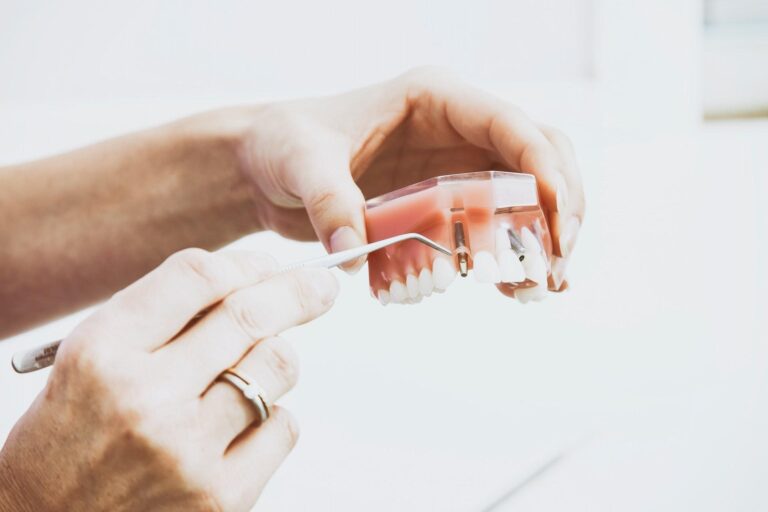
Dental implants are the most expensive item on most people’s dental list and the hardest to fund. Grants for implants do exist, but eligibility is stricter than most people expect. Income alone usually isn’t enough. Most programs also evaluate oral health status, medical necessity, and whether you can document why implants are the right treatment over cheaper alternatives like dentures or bridges.
The honest reality: free implants through charity are available only in narrow categories, veterans through a near-saturated pipeline, domestic violence survivors through specific programs, and a handful of nominated patients per year. Anyone promising grants to the general public is typically running a referral or discount scheme, not a charitable program. The realistic paths for most readers are dental school clinics at 30 to 50% off, state Medicaid for trauma or cancer cases, and stacking dental savings plans on cash payment.
Government and Nonprofit Assistance for Dental Treatment
The federal government does not issue direct grants to individuals for dental implants. What exists is a patchwork of programs some government-funded, some nonprofit-run that can reduce or eliminate dental costs depending on your circumstances.
1. Medicaid Coverage for Dental Implants
Adult dental Medicaid remains optional under federal law, and coverage varies dramatically by state. As of December 2025, 38 states plus DC now offer enhanced adult dental benefits (CareQuest), and 18 states have expanded coverage since 2021. Alabama remains the only state with no adult dental coverage outside pregnancy and postpartum care.
Under 21: Medicaid’s EPSDT (Early and Periodic Screening, Diagnostic, and Treatment) benefit is mandatory and comprehensive. States must cover any medically necessary dental service to correct or treat a condition including implants for congenital conditions like ectodermal dysplasia or anodontia, traumatic tooth loss, or oral cancer reconstruction. The process requires prior authorization and clinical documentation, but families have appeal rights if denied.
Over 21: Coverage drops off sharply. Most states limit adult Medicaid dental to emergency extractions and basic care. Only a small number of states cover comprehensive treatment, and very few will approve implants without an exceptional medical-necessity case. States most likely to approve adult implant coverage are California, New York, Massachusetts, Washington, and Minnesota always with an oral surgeon’s letter of medical necessity, physician corroboration, evidence that conventional alternatives fail, and prior authorization before any treatment begins.
Why Medicaid Coverage for Dental Implants Is Limited
Medicaid classifies implants as non-essential and high-cost in most state plans. A single implant costs $3,000, $6,000 on average, and that price barrier limits coverage even in states with broader dental benefits. If you believe implants are medically necessary, ask your dentist to submit documentation to your state Medicaid office making that case. It rarely succeeds, but it is worth pursuing if alternatives are not viable.
Which States Expanded Adult Dental Coverage Recently
Several states have significantly improved adult dental benefits in recent years: Georgia moved from emergency-only to comprehensive coverage in July 2024 (Ada), Utah implemented an all-adult dental benefit in April 2025, West Virginia raised its annual cap to $2,000 in July 2024, and Kansas added exams and cleanings in July 2024. Nebraska lifted its annual cap entirely in January 2024. Many secondary sources still reflect older restrictions for these states check the CareQuest Adult Dental Coverage Checker for the most current information on your state.
A note on political risk: Federal Medicaid spending cuts passed in 2025 are projected to reduce optional benefit funding over the coming decade. Optional benefits like adult dental are historically the first to be reduced when states face budget pressure. If you live in a state with recently expanded coverage, accessing those benefits now is advisable rather than assuming they will remain.
2. Medicare Dental Coverage
Original Medicare Parts A and B do not cover routine dental (CMS.gov). Limited exceptions exist when dental services are directly tied to a covered medical procedure organ transplant preparation, cardiac valve replacement, chemotherapy, head and neck cancer treatment, and dialysis. Dental ridge reconstruction performed alongside oral tumor removal is also covered. For 2026, Medicare did not add any new dental coverage categories despite advocacy for diabetes- and autoimmune-linked dental care.
Medicare Advantage (Part C) is a different picture. About 98% of Medicare Advantage plans include some dental benefit, but comprehensive implant coverage is available in fewer than 40% of US counties. Annual maximums average around $1,300, with most plans capping dental benefits at $1,000, $2,000. Implants fall at the major services tier typically 50% coinsurance after the cap meaning a plan usually contributes $500, $1,500 toward an implant costing $3,000, $6,000. During open enrollment, reviewing Advantage plan options specifically for dental benefit details is worth doing if implants are a priority.
3. Dental Preventive Clinical Support Program
This program, administered through the Department of Health and Human Services and the Indian Health Service (IHS), funds dental services at clinics serving Native American communities and other federally designated underserved populations. It provides institutional funding to qualifying clinics, which then offer reduced or free care to eligible patients. If you receive care through an IHS facility or a federally qualified health center serving these populations, ask what dental services are available and covered. IHS coverage focuses on preventive and basic restorative care; implants are classified as lowest priority and rarely funded through PRC (Purchased/Referred Care) budgets.
4. Grants from Dental Charities
Several nonprofits offer direct dental assistance, though most focus on preventive care, children, or specific populations rather than implants for working-age adults.
Dental Lifeline Network, Donated Dental Services (DDS) (dentallifeline.org; 303-534-5360) is the nation’s largest volunteer-dentist network. Eligibility requires both inability to pay AND a permanent disability, age 65+, or being medically fragile income alone does not qualify. Waiting lists are currently closed in California, Mississippi, Illinois, and parts of New Jersey. Services focus on extractions, fillings, root canals, cleanings, and dentures. Implants are not typically covered.
Give Back a Smile (givebackasmile.com; 800-773-4227) serves adult survivors of domestic violence, sexual violence, or human trafficking who sustained dental injury to the front teeth from the abuse. Eligibility requires that the incident occurred at least one year ago, that the applicant has been away from the abusive situation for one year, and that they meet with a DV or SA advocate to complete the application. A $20 non-refundable application fee applies. Front-teeth restoration including veneers, crowns, bridges, and sometimes implants is covered at the volunteer dentist’s discretion.
AAID Foundation “Smile, Veteran!” (aaid.com; 312-335-1550) is active but extremely limited. The 2025 application cycle closed in August 2025. Veterans cannot self-apply an AAID-credentialed participating doctor must initiate the application. The program typically helps fewer than ten veterans per year from hundreds of inquiries. Veterans are generally redirected to Dental Lifeline, Give Back a Smile, Everyone for Veterans, and Smiles for Everyone.
Smiles for Everyone Foundation (smilesforeveryone.org), backed by Smile Brands, runs free clinic days at their offices across Arizona, Arkansas, California, Colorado, Florida, Indiana, Maryland, Ohio, Oregon, Nevada, Pennsylvania, Tennessee, Texas, Utah, Virginia, and Washington. They also run a Smile Makeovers program where providers nominate patients for pro-bono comprehensive care, and an Implanting Inspiration initiative offering free implants to a very small number of selected patients annually.
America’s ToothFairy (americastoothfairy.org) does not provide direct care to individual adult patients. It funds nonprofit clinics serving underserved children. Use their provider finder to locate a partner clinic for children’s dental needs.
ADA Foundation (adafoundation.org) runs the Give Kids a Smile program (children’s preventive and restorative care at annual events nationwide) and a newer Give Veterans a Smile initiative. Foundation grants go to dental providers and organizations, not directly to patients.
Remote Area Medical (ramusa.org) and similar Mission of Mercy events offer free extractions, fillings, and cleanings with no ID or insurance required. No implants. Check their schedules for events in your state.
5. Clinical Trials
Some universities and research institutions offer free dental implant procedures as part of clinical studies. Participants receive treatment at no cost in exchange for agreeing to follow-up exams and data collection over 12 or more months. The work is performed by licensed professionals under supervision. Search ClinicalTrials.gov for “dental implant” studies currently recruiting in your area. Travel costs for follow-up appointments are typically the patient’s responsibility.
6. Cosmetic Dentistry Grants (CDG) What You Need to Know
Cosmetic Dentistry Grants (cosmeticdentistrygrants.org) is a legal but widely misunderstood program. It is not a charity it is a dental referral network where participating dentists pay a monthly fee to receive patient leads. Patients are matched to a local participating dentist and receive a partial discount toward cosmetic or implant work, typically covering 25 to 30% of the treatment cost. Patients pay the remaining 70 to 75% out of pocket.
Multiple consumer complaint boards document cases where participating dentists’ list prices were higher than non-participating local dentists, negating the discount. If you explore CDG, compare the quoted treatment plan price against at least two other local dentists before proceeding. It delivers real savings to some patients, but the “grant” framing is misleading for low-income adults seeking meaningful financial assistance.
Federally Qualified Health Centers (FQHCs)
FQHCs must accept all patients regardless of ability to pay, and roughly 80% of them provide dental services. They served approximately 7 million dental patients in 2024. The sliding fee discount scale works as follows: patients at or below 100% of the federal poverty level ($15,650 for a single person in 2025) typically pay a nominal fee of $0, $35 per visit. Between 101% and 200% FPL, partial discounts apply on a sliding scale. Above 200% FPL, patients pay full fees.
FQHCs generally do not cover dental implants. Services focus on preventive care, emergency care, extractions, fillings, root canals, and dentures. To find your nearest FQHC, use HRSA’s locator at findahealthcenter.hrsa.gov or call 1-877-464-4772.
Dental Schools
Accredited dental schools offer implants at 30 to 50% below private-practice pricing, making them the best legitimate option for most patients who don’t qualify for government coverage or charity programs. Work is performed by dental students under direct faculty supervision, or by licensed residents in postgraduate training programs the latter being faster and suited to more complex cases.
Find accredited programs through CODA’s program finder at coda.ada.org/find-a-program. Major implant programs exist at NYU, UCLA, USC, Harvard, University of Michigan, Boston University, VCU, University of Washington, Columbia, Penn, and UCSF, among others.
Trade-offs to be aware of: appointments run longer because each step involves faculty review; implant treatment timelines can stretch to 6 to 9 months when bone grafting is required; waitlists can be long; and case selection is strict, with complex cases often routed to higher-fee residency clinics. For patients with time flexibility and proximity to a school, this is consistently the most cost-effective path.
What Dental Implants Cost in 2025 to 2026
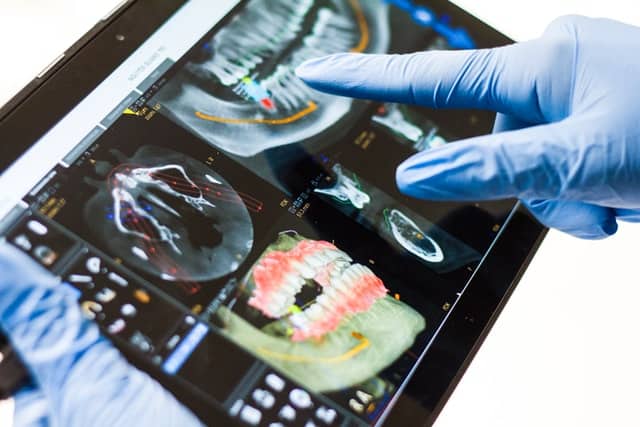
A single implant post, abutment, and crown runs $3,000, $6,000 nationally, with most sources citing an average around $4,000, $4,800. Component costs break down roughly as follows: the implant post runs $1,500, $2,000, the abutment $300, $500, and the crown $1,000, $3,000 depending on material. Additional costs include a 3D CBCT scan ($200, $500), bone graft if needed ($500, $3,000), extraction ($150, $650), and sedation if used ($300, $800).
Full-mouth restoration typically ranges from $25,000, $60,000. All-on-4 or All-on-6 per arch runs $18,000, $35,000 for most providers. Implant-supported removable dentures run $6,000, $15,000 per arch.
Regional variation is significant: costs in Alabama, Arkansas, Mississippi, and Louisiana run approximately 10% below the national average, while California, New York, and Hawaii run 30 to 40% above. Most dental insurance plans classify implants as elective, contributing 50% of one component up to an annual maximum meaning even insured patients often pay $2,500, $5,000 out of pocket per implant.
Dental Savings Plans
Dental savings plans sometimes called discount plans charge annual membership fees of $80, $300 in exchange for pre-negotiated discounted rates at participating dentists. They are not insurance, have no waiting periods, no annual maximums, and no claim forms. Major options include Careington Care 500 (~$129, $179/year, ~20% off specialist procedures), Aetna Vital Savings (~$149/year, 15 to 50% discounts), and Cigna Dental Savings ($100, $150/year, 20 to 50% discounts).
On a $5,000 implant, a 20% discount saves $1,000. After the membership fee, actual savings typically run $800, $2,000 per implant. A dental school at 30 to 50% off usually matches or beats this without any membership fee. Savings plans are most useful when no dental school is accessible, when stacking multiple procedures in the same year, or when combining with other discounts. Always call the specific dentist to confirm they accept your specific plan before enrolling provider lists are not always up to date.
Who Is Eligible to Get Dental Grants for Low-Income Adults
Eligibility criteria differ across every program, but common requirements include income at or below 200% of the federal poverty level for most government programs, state or county residency for location-specific programs, oral health that meets minimum standards (gum disease or significant bone loss can disqualify candidates for implants specifically), medical-necessity documentation for Medicaid and hospital-affiliated programs, and age restrictions in some cases. An oral evaluation by a licensed dentist is almost always required before any grant application can proceed, and many programs require the dentist to initiate or co-sign the application.
| Dental Grant Types |
|---|
| Dental Grants for Disabled |
| Dental Grants for Single Mothers |
| Dental Grants for Veterans |
| Dental Grants for Recovering Addicts |
| Dental Grants for Senior Citizens |
Interactive US Map for Dental Grants (by State)
Find Local Dental Implant Assistance: State-by-State Guide to Dental Grants
Dental assistance may cover only part of the treatment, and availability often depends on funding, location, and clinical eligibility.
Frequently Asked Questions
Does the government provide dental grants directly to low-income individuals?
Direct government grants to individuals for dental treatment are uncommon. What exists are government-funded programs primarily Medicaid, CHIP, and federally qualified health centers that provide subsidized or free care to eligible patients. If a government program doesn’t cover your situation, nonprofit organizations and private dental charities are the next avenue. Applying to multiple programs simultaneously rather than waiting for one rejection is the most practical approach.
What is the purpose of a dental grant program?
Dental grant programs exist to reduce or eliminate the cost of dental treatment for people who can’t afford it covering everything from routine cleanings to major restorative work like implants. Beyond direct cost reduction, some programs connect patients with participating providers willing to work within a budget and offer structured payment arrangements.
Are dental implants expensive?
Yes. A single implant typically costs $3,000, $6,000 when you factor in the implant post, abutment, and crown. For patients missing multiple teeth, costs can reach $25,000 or more. That price point puts implants out of reach for most uninsured low-income adults without some form of assistance, which is why dentures and bridges covered by more programs are often the realistic alternative.
What makes dental implants so expensive in the US?
Implants are a multi-step surgical procedure requiring specialized training, imaging such as CT scans, surgical equipment, custom-fabricated components, and multiple appointments over several months. The cost reflects the skill and overhead involved. A poorly done implant can cause serious complications, so choosing a qualified provider matters more than finding the lowest price particularly when bone grafting or sinus lifts are required.
How long do dental implants last?
With proper oral hygiene and regular dental care, implants typically last 15 to 25 years, and many last a lifetime. The crown on top may need replacement every 10 to 15 years depending on wear, but the implant post itself, once integrated with the jawbone, is generally permanent. Smoking, uncontrolled diabetes, and poor bone density are the factors most likely to shorten implant lifespan.
What types of dental implants are available?
The four main restoration types are single-tooth implants for one missing tooth, implant-supported dentures for a full or partial denture anchored by implants, full-mouth acrylic restoration, and full arch dental implants providing a fixed set of teeth on implant posts. The right option depends on how many teeth are missing, jawbone density, and overall health your oral surgeon or prosthodontist can advise based on your specific case.
What implants are most commonly used in the US?
Endosteal implants titanium posts surgically placed directly into the jawbone are by far the most common. Titanium integrates with bone tissue through osseointegration without being rejected by the body. The procedure typically requires sufficient bone density; patients with significant bone loss may need a bone graft before placement is possible, which adds cost and time to treatment.
Are there risks associated with dental implants?
Yes. Risks include infection at the implant site, nerve damage, implant failure if the post doesn’t integrate with the bone, bone loss around the implant, and in rare cases prolonged bleeding or jawbone complications. Success rates are high above 95% in most clinical studies but the procedure is not without risk, particularly in patients who smoke, have uncontrolled diabetes, or have compromised immune systems. Discuss your full medical history with your oral surgeon before proceeding.
See Also
Signs That You Will Be Approved for Disability
Stem Cell Dental Implants Clinical Trials
Does Medicaid Cover Weight Loss Surgery
How to Get Dental Implants Covered by Insurance