If you’re searching for dental grants in California, you probably need real dental work and can’t easily afford it. Here’s the honest version: true ‘dental grants’ for individuals are rare, but California does have genuine ways to get low-cost or free care. This guide walks through all of them.
We’ll cover what California’s Medicaid actually pays for, the dental schools that treat the public at a discount, and the charitable programs that help adults who fall through the cracks.
What “Dental Grants” Really Means
It’s worth clearing up a common misconception first. There is no government program that simply hands individuals a ‘dental grant’ to pay for their own care. The grants that exist in dentistry generally go to clinics, nonprofits, and researchers, not to patients directly.
What that money often does, though, is fund the free and low-cost clinics you can actually use. So the practical path isn’t applying for a grant; it’s finding the Medicaid benefit, school clinic, or charitable program that the funding supports.
California Medicaid and Adult Dental
California’s Medi-Cal Dental (still often called Denti-Cal) covers comprehensive adult services after benefits were fully restored, exams, cleanings, fillings, root canals, crowns, and full dentures.
Since California covers a fair amount, your first step is simply making sure you’re enrolled and finding a dentist who accepts Medicaid, which can be the hardest part in some areas because not every practice takes it. A good approach is to call the state Medicaid dental line or your managed-care plan for a list of participating dentists near you. Then use the options below for anything your benefit excludes, caps, or has a long waitlist for.
Adult Medicaid dental benefits change with state budgets, and details can vary by managed-care plan, so confirm your current coverage with the state Medicaid office or your plan before scheduling work. If you have children, note that Medicaid dental for kids is comprehensive in every state.
Discounted Care at Dental Schools
One of the most reliable ways to cut dental costs in California is a dental school. Supervised students deliver care at a fraction of private-practice prices, and the state’s schools include UCLA, UCSF, USC, Loma Linda University, the University of the Pacific, and Western University of Health Sciences.
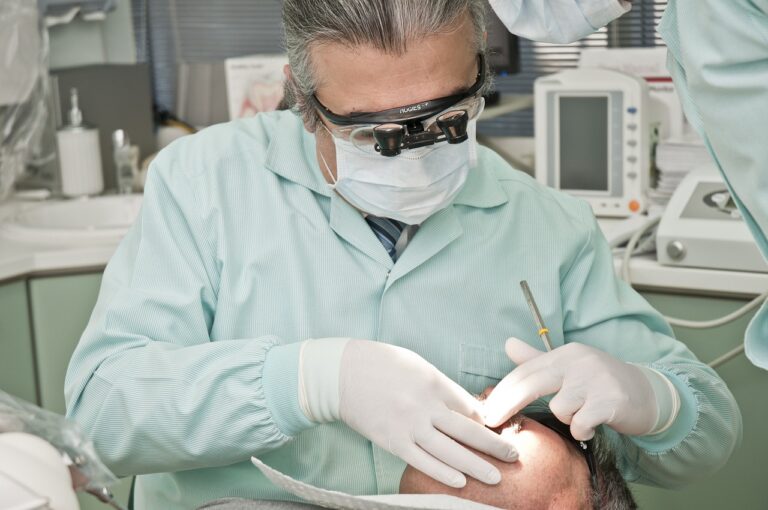
Appointments take longer than a regular office because each step is checked by an instructor, but you get careful, quality care for far less, and school clinics often take patients who can’t be seen elsewhere. Call ahead to ask about fees, waitlists, and which services their clinic offers.
Where to Find Free Dental Care
Several charitable networks help adults who can’t afford care. The Dental Lifeline Network runs Donated Dental Services (DDS), which provides free comprehensive treatment to people who are elderly, disabled, or medically fragile through volunteer dentists, it operates in California and most other states, though waitlists can be long.
Free clinic events are another route: Mission of Mercy and similar large-scale volunteer events offer free dental care to anyone who shows up, often serving hundreds of people over a weekend. And federally qualified health centers (FQHCs) across California provide dental care on a sliding scale based on your income, you can find one through the HRSA locator.
Additional Cost-Cutting Options
For those who fall outside the programs above, other savings exist. A dental discount plan, a membership that lowers fees at participating providers, can soften the cost of routine care, and it’s not the same as insurance, so there’s no waiting period. Ask any dentist whether they offer payment plans or work with a financing company.
Clinical trials are another overlooked option: the NIH and university dental programs occasionally need study participants and provide care at no cost. And simply asking for a cash or prompt-payment discount can lower a bill more often than people expect.
Where to Start in California
If this feels like a lot, here’s a simple order of operations for California. First, check whether you qualify for Medicaid and exactly what it covers, since that’s the cheapest route if you’re eligible. Second, if Medicaid won’t cover what you need, call a dental school clinic for discounted treatment. Third, if you’re elderly, disabled, or medically fragile, apply to Donated Dental Services and keep an eye out for Mission of Mercy events.
For whatever is left, a federally qualified health center’s sliding scale or a dental discount plan can lower the price further. Working through it in that order, Medicaid, school clinic, charity, then discounts, gets most people the care they need for the least money.
Common Questions
Can I get a dental grant in California? Not in the way most people hope. There’s no government program that gives individuals cash ‘dental grants’ in California. Real help comes through Medicaid, discounted dental-school clinics, and charitable programs like Donated Dental Services.
Where can I get free or cheap dental care in California? Start with a federally qualified health center (sliding-scale fees), a California dental-school clinic for discounted work, and the Dental Lifeline Network’s Donated Dental Services if you’re elderly, disabled, or medically fragile. Mission of Mercy events offer free care when they’re held nearby.
How do dental school clinics work? At a dental school clinic, supervised students do the work at a steep discount, commonly well below normal fees. The trade-off is longer appointments, but faculty oversee every step, so the care is careful and legitimate.
Dental assistance may cover only part of the treatment, and availability often depends on funding, location, and clinical eligibility.