If you are a homeowner in Texas searching for “home improvement grants” or “home repair grants,” here is the honest picture: most help comes as targeted programs and low-interest loans rather than a general cash grant, but real assistance exists to repair, weatherize, and adapt your home. Here is what actually helps in Texas, combining federal programs with state and local ones. Programs change, so verify each before relying on it.
The Honest Answer
There is rarely a general “home improvement grant” that hands Texas homeowners cash. What genuinely helps are federal repair programs, free weatherization, state housing-agency programs, and local rehabilitation and volunteer efforts. The right mix depends on your income, age, location, and the type of repair, and combining programs often gets the whole job done.
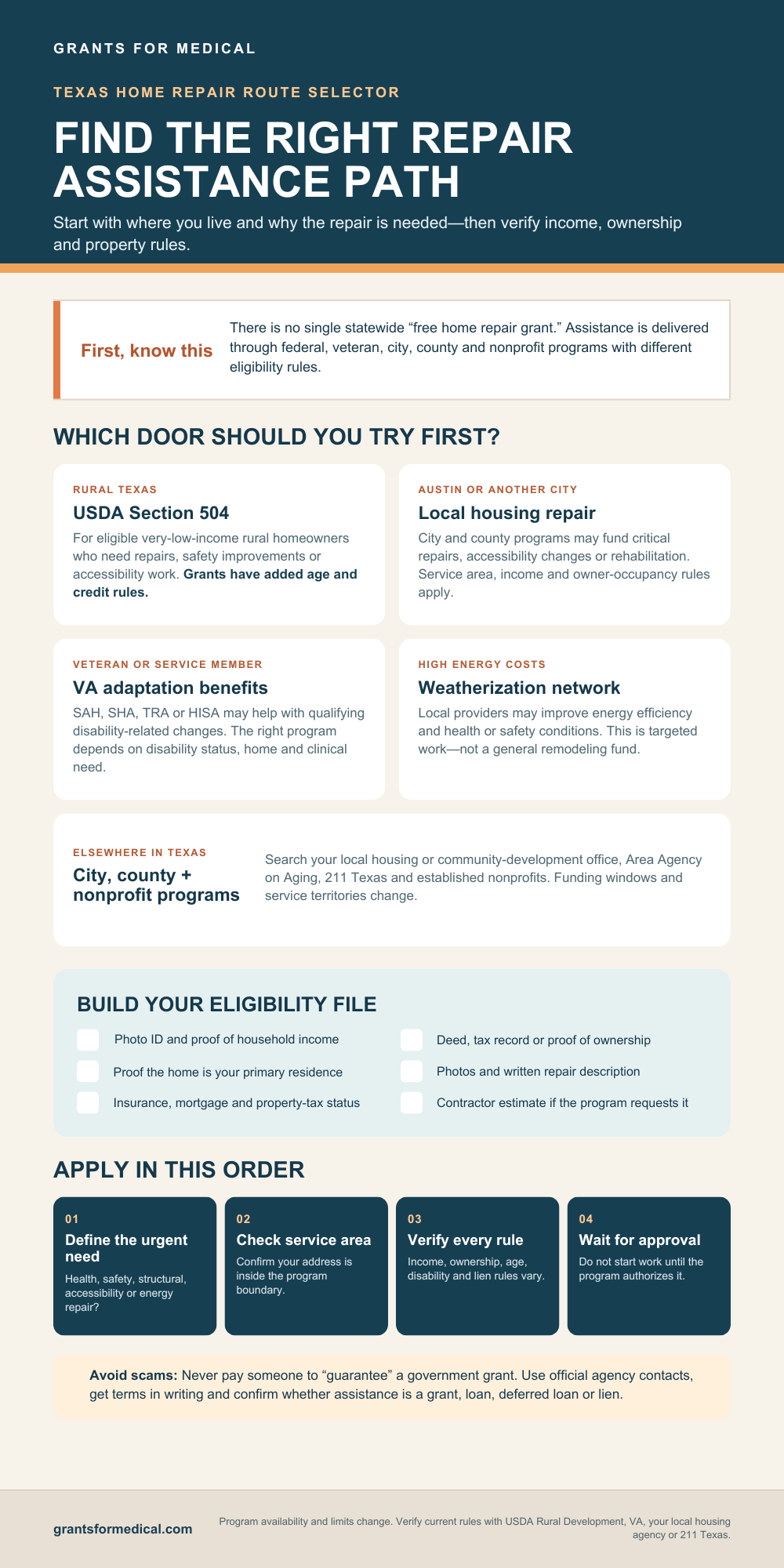
Federal Programs That Help in Texas
The backbone of home-repair help is federal, and it works in Texas as elsewhere. The USDA Section 504 program offers very-low-income rural homeowners repair loans up to $40,000 at 1 percent interest, plus grants up to $10,000 for homeowners age 62 and older to remove health and safety hazards. The Weatherization Assistance Program provides free energy-efficiency work like insulation and heating fixes to low-income households, and LIHEAP helps with utility bills. Disabled veterans can access VA housing grants, and Medicaid waivers can fund accessibility modifications like ramps and grab bars.
Texas State Programs
Texas has a standout accessibility program. The Amy Young Barrier Removal Program, run by the Texas Department of Housing and Community Affairs (TDHCA), provides a one-time grant to eligible low-income Texans with disabilities to make their homes accessible, such as adding ramps or modifying bathrooms. TDHCA also funds owner-occupied home rehabilitation through the federal HOME program via local partners, and administers weatherization statewide. Because grant amounts and eligibility change, confirm current details with TDHCA before applying.
Local and Volunteer Help in Texas
Local help matters too. Many Texas cities and counties run home-repair or rehabilitation programs funded by federal Community Development Block Grants, so ask your city or county housing or community-development office. Rebuilding Together affiliates and Habitat for Humanity provide free or low-cost volunteer repairs for lower-income homeowners in many Texas communities. For older homeowners, your local Area Agency on Aging, reachable through the Eldercare Locator, connects seniors to home-repair and safety-modification programs.
A Practical Order in Texas
Work through these together. In rural areas, apply for USDA Section 504 help. Apply for Weatherization and LIHEAP for energy work and bills. Check your state housing finance agency and your city or county for repair and rehabilitation programs. Contact Rebuilding Together or Habitat for volunteer help, and your Area Agency on Aging if you are a senior. Call 211 to find local resources. See our guide to charities that help with medical bills for related help.
Getting Your Project Funded
A few habits improve your odds in Texas. Gather proof of income, homeownership, and age or disability, which nearly every program requires. Prioritize health and safety repairs like heating, roofing, plumbing, and fall hazards, since those are what most programs fund. Ask about combining programs, since a USDA or state grant might cover one hazard while weatherization handles insulation and a volunteer group tackles a safety modification. And apply early to anything with a waitlist, since demand often exceeds funding.
Free Weatherization and Energy Help in Texas
One of the most reliable free programs is easy to overlook. It repairs your home and lowers your bills at the same time.
The Weatherization Assistance Program serves low-income households across Texas at no cost. Crews add insulation, seal leaks, and fix or replace unsafe heating systems. LIHEAP can also help with energy bills and some emergency repairs. Because these fixes cut monthly costs, they free up money for other needs. Contact your Texas weatherization or Community Action agency to apply.
Avoiding Home-Repair Scams in Texas
Repair programs attract scammers, so a little caution protects you. Real help never works this way.
Be wary of anyone who knocks unannounced, demands cash up front, or pressures you to sign today. Legitimate grant programs in Texas never charge a fee just to apply. Get written estimates from licensed contractors, check references, and never pay in full before the work is done. When something feels rushed, slow down and verify it first.
Texas Home Repair FAQs
Are there real home-repair grants in Texas?
Yes, though most are targeted: USDA Section 504 grants for owners 62 and older, free weatherization, VA grants for veterans, and some local programs.
What is the main state housing agency in Texas?
The Texas Department of Housing and Community Affairs (TDHCA), which offers homeownership and, in many cases, home-improvement or rehabilitation programs. Check its site for current offerings.
Can I get free help fixing my home?
Often yes. Weatherization provides free energy work, and Rebuilding Together and Habitat offer free volunteer repairs for lower-income owners.
Who qualifies for USDA Section 504 grants?
Very-low-income rural homeowners age 62 and older who cannot repay a loan. Younger owners can use the low-interest repair loans.
Is there help for accessibility modifications?
Yes. Medicaid waivers can fund ramps and grab bars, and the Amy Young Barrier Removal Program specifically funds disability accessibility work.
Where do I start?
Call 211 for local resources, check your state housing agency and county programs, and apply for weatherization and USDA help.
Do I have to repay a home-repair grant?
True grants like USDA Section 504 for seniors generally do not require repayment unless you sell the home within three years. Loans, of course, are repaid, and some state rehab loans are deferred or forgivable over time.
Can I combine state and federal help?
Yes, and it often makes sense to. Many homeowners layer a federal grant, free weatherization, and a local or volunteer program to complete a full project, since each covers different repairs.
Income limits, occupancy rules, credit standards, funding availability, and eligible properties vary by program and can change.