Malpractice insurance, more precisely, professional liability insurance, protects nurses financially and legally if they’re named in a claim related to their work. Many nurses assume their employer’s policy has them fully covered, but that’s not always the case. This guide explains whether you need your own policy, what it costs today, and how to choose one.
Do Nurses Really Need Their Own Policy?
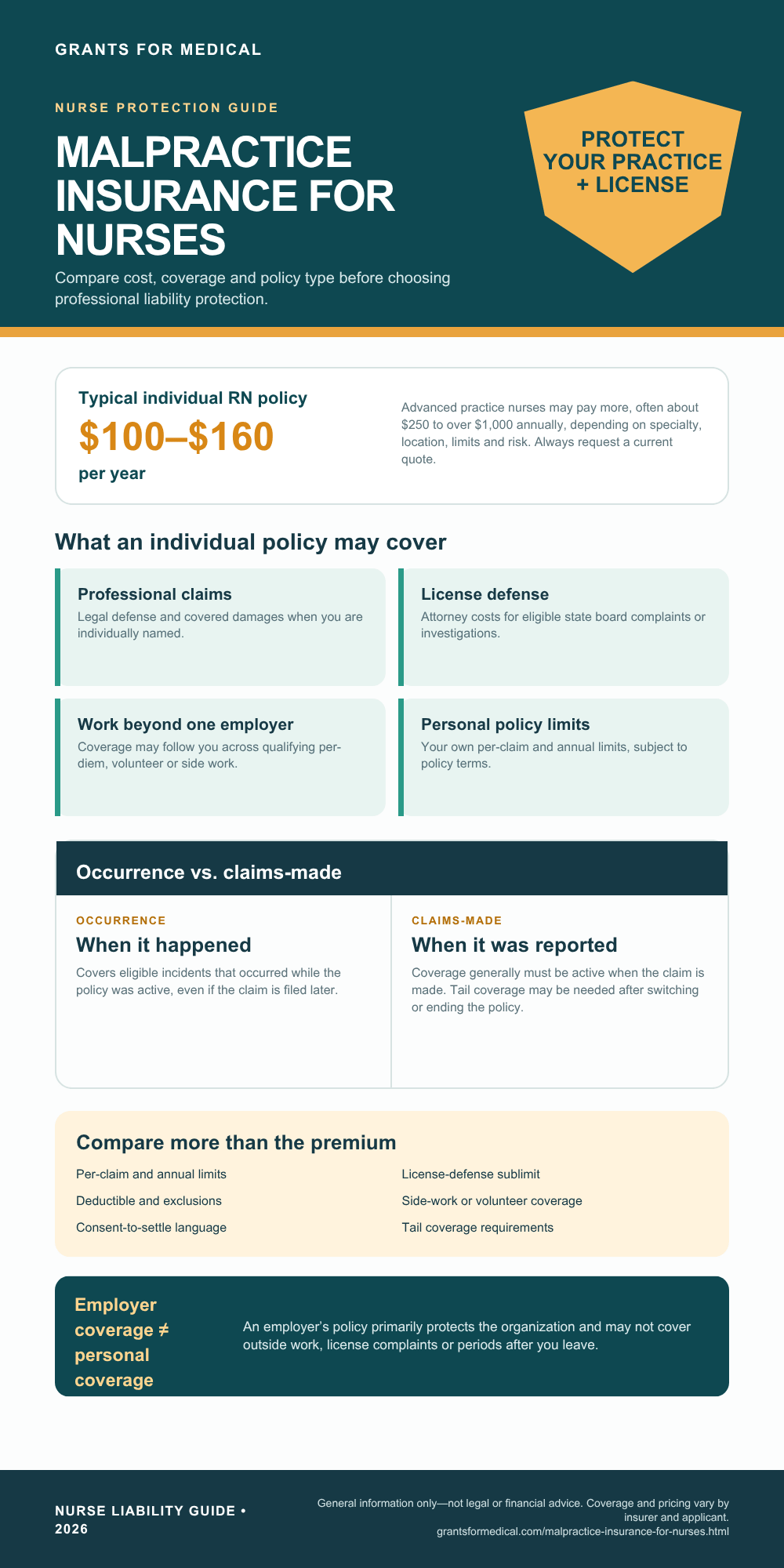
Most employers carry malpractice coverage, but it’s designed to protect the employer first, and it may not fully cover you, especially if your interests and the employer’s diverge, if you work outside your main job (per diem, volunteering, side gigs), or if a complaint targets your nursing license rather than a specific lawsuit. Employer coverage also ends when the job does.
An individual policy follows you, covers you around the clock, and typically includes license-defense protection to help if the state board of nursing investigates you. For many nurses, that independence and the license coverage are the main reasons to carry their own policy, even when the employer provides some coverage.
What It Costs
The good news is that nursing malpractice insurance is generally affordable. For a registered nurse, an individual policy commonly runs roughly $100 to $160 a year, with coverage limits often around $1 million per claim. Costs rise for advanced practice, since the risk is higher: nurse practitioners typically pay anywhere from about $250 to well over $1,000 a year depending on their specialty, with higher-risk fields costing more.
Your exact premium depends on your role, specialty, coverage limits, and location, so get a quote for your situation. Even at the higher end, the cost is small relative to what defending a claim or a license complaint out of pocket could run.
Where Nurses Buy Coverage
A few well-known providers specialize in nurse and healthcare professional liability, including Nurses Service Organization (NSO), Proliability, and Healthcare Providers Service Organization (HPSO). They offer individual policies for RNs and advanced practice nurses, often with license-defense coverage built in, plus discounts for students, new grads, and members of certain associations.
It’s worth getting quotes from more than one and comparing not just price but what’s actually covered. Some professional nursing associations also offer or discount coverage as a member benefit, so check there too.
When Nurses Actually Use It
It helps to understand when this coverage matters, because it’s not only about being sued by a patient. A common trigger is a complaint to the state board of nursing, over a medication error, a documentation issue, a boundary question, or even an accusation that turns out to be unfounded. Defending your license before the board can be expensive and stressful, and it’s separate from any lawsuit.
Individual policies with license-defense coverage help pay for a lawyer in exactly these situations. Nurses also draw on their own coverage when they’re named individually in a lawsuit, when they do work outside their main employer, or when they change jobs and their old employer’s coverage no longer applies. In other words, the moments you’d most want coverage are often the ones an employer policy doesn’t fully address.
What to Look For in a Policy
Beyond price, a few features matter. Check whether the policy is ‘occurrence’ or ‘claims-made’: occurrence policies cover incidents that happen during the policy period even if the claim comes years later, while claims-made policies may require extra ‘tail’ coverage when you switch or end a policy. Confirm the coverage limits (per-claim and annual), and make sure license-defense protection is included, since board complaints are a common reason nurses use their coverage.
Read what’s excluded, note any deductible, and consider whether you need coverage for side work or volunteering. Matching the policy to how and where you actually practice is more important than simply buying the cheapest option.
Common Questions
How much is malpractice insurance for a nurse? For a registered nurse, an individual policy commonly costs about $100 to $160 a year. Nurse practitioners pay more, roughly $250 to over $1,000 annually depending on specialty and coverage. Your exact price depends on your role, limits, and location, so get a personalized quote.
If my employer covers me, do I still need my own policy? Often, yes. Employer coverage protects the employer first, may not cover you for outside work or license complaints, and ends when the job does. An individual policy follows you everywhere and usually includes license-defense protection, which many nurses consider the main benefit.
Where can nurses buy malpractice insurance? Providers that specialize in it include NSO, Proliability, and HPSO, offering individual policies for RNs and advanced practice nurses, frequently with license defense included. Compare a couple of quotes on both price and what’s covered, and check whether a nursing association offers a discount.
What’s the difference between occurrence and claims-made coverage? An occurrence policy covers incidents that happen while the policy is active, even if the claim is filed years later. A claims-made policy only covers claims filed while the policy is active, so if you switch or drop it, you may need to buy extra ‘tail’ coverage to stay protected. Occurrence coverage is simpler, and worth asking about when you compare policies.