If you have had your tubes tied and now want them reversed, the cost can be daunting, so it is natural to search for “free tubal reversal grants.” The honest answer is important: dedicated grants that pay for tubal reversal are largely a myth. But there are real, practical ways to make it more affordable, and knowing them saves you from chasing programs that do not exist. Here is the reality. Programs change, so verify each before relying on them.
The Honest Answer
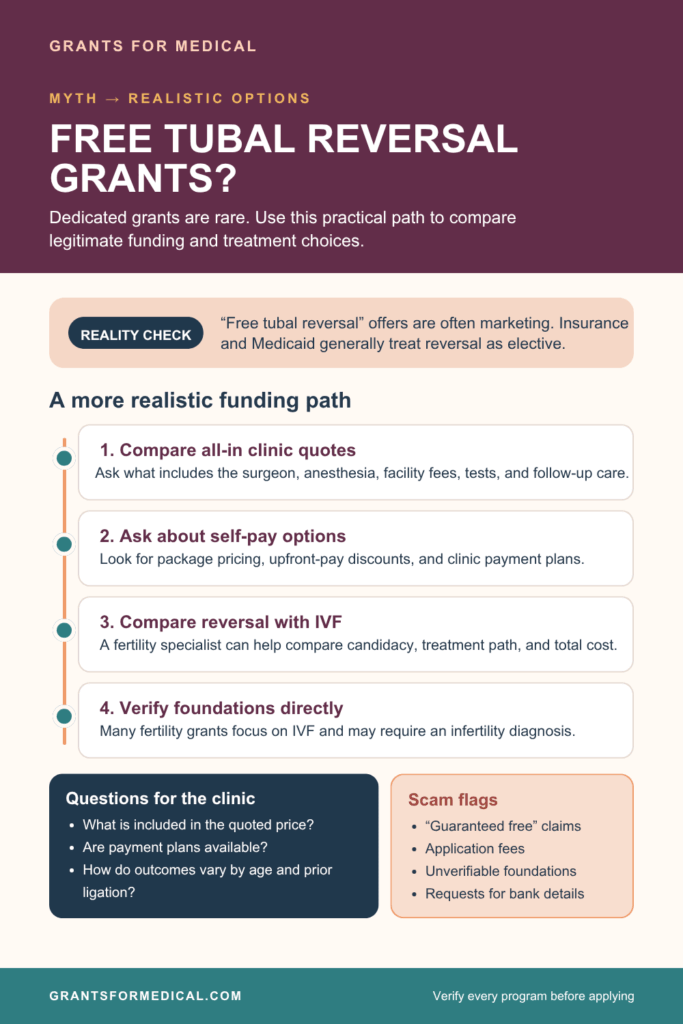
“Free tubal reversal grants” are mostly a marketing hook. Tubal reversal is elective surgery that insurance and Medicaid almost never cover, so most people pay out of pocket, and there are very few, if any, dedicated grant programs for it. The realistic help is clinic discounts, payment plans, and a few fertility foundations, most of which focus on IVF rather than reversal.
Why Insurance Does Not Cover It
Tubal reversal is classified as elective, because the original tubal ligation was voluntary sterilization, so insurance and Medicaid rarely cover the reversal even though they usually covered the ligation. This is the core reason there is no easy funding: the procedure is considered a personal choice rather than a medical necessity, which also disqualifies it from most infertility grants that require an infertility diagnosis.
The Realistic Options
The most practical route is the clinic itself. Some clinics that specialize in tubal reversal offer lower package pricing, payment plans, or financing, which can bring the cost down substantially, so get quotes from more than one and ask specifically about self-pay discounts and financing. A few fertility grant foundations, such as BabyQuest and the Cade Foundation, award money toward fertility treatment, but they are oriented toward IVF and typically require an infertility diagnosis, which voluntary sterilization does not meet, so verify directly whether a reversal could qualify.
Reversal vs IVF
It is worth comparing tubal reversal to IVF for your situation, because fertility grants and financing options are far more available for IVF than for reversal. Depending on your age and circumstances, one path may be both more fundable and more likely to succeed, so discuss both with a fertility specialist before deciding where to spend your money and effort.
Be Wary of “Free Grant” Sites
Many pages promising “free tubal reversal grants” are affiliate or lead-generation sites that collect your information without providing real funding. Be cautious of any site that guarantees a free reversal or asks for a fee, and treat named “foundations” you cannot verify with skepticism, since several that circulate online could not be confirmed as legitimate, active grantors.
A Practical Order
Get quotes from clinics and ask about self-pay discounts, payment plans, and financing. Compare reversal against IVF for your situation. Apply to fertility grant foundations if you might qualify, understanding the infertility-diagnosis requirement, and use a reputable fertility organization’s directory for additional options. Consider medical financing only as a last resort.
Financing a Tubal Reversal
Because insurance rarely covers it, most people pay for a reversal themselves. Financing can spread the cost.
Many clinics offer payment plans or work with medical financing companies. Read the interest terms carefully, since deferred-interest plans get expensive if not paid on time. FSA or HSA funds may apply. Compare the total cost of financing against saving up first.
Fertility Grant Foundations to Check
A few fertility foundations award money toward treatment. Most focus on IVF, but it is worth checking.
Groups like BabyQuest and the Cade Foundation help with fertility costs, though they usually require an infertility diagnosis. A tubal reversal may or may not qualify, so verify directly. Applying is competitive and grants are partial. Still, it costs little to ask.
Free Tubal Reversal Grant FAQs
Are there truly free tubal reversal grants?
Essentially no dedicated ones. “Free tubal reversal grants” are mostly marketing. The real help is clinic discounts, payment plans, and a few IVF-oriented fertility grants.
Does insurance cover tubal reversal?
Rarely. It is treated as elective, because the original sterilization was voluntary.
Does Medicaid pay for it?
Generally no. It is considered elective and is not covered.
Can a fertility grant fund a reversal?
Most target IVF and require an infertility diagnosis, which voluntary sterilization does not meet. Verify directly whether a reversal could qualify.
Is IVF easier to fund than reversal?
Often yes. Most fertility grants and financing options focus on IVF, so it is worth comparing the two paths.
How can I make a reversal more affordable?
Get quotes from multiple clinics and ask about self-pay discounts, package pricing, and payment plans or financing.
Questions to Ask a Clinic
Because the clinic is your most realistic source of savings, come prepared. Ask for the all-in self-pay price, including anesthesia and facility fees, so you can compare quotes fairly. Ask whether they offer a discount for paying up front, and whether they have an in-house payment plan or partner with a medical-financing company. Ask about the surgeon’s success rates by age and type of prior ligation, since that affects whether the money is well spent. A clinic that answers these clearly is easier to trust than one that markets vague “grants.”
Protecting Your Money
Finally, guard against the common traps. Never pay a fee to “apply” for a grant, since legitimate grants do not charge applicants. Be skeptical of any organization you cannot verify through an independent source, and do not hand over bank details to a site promising a free procedure. If you use medical financing, read the interest terms carefully, because deferred-interest plans can become expensive if not paid in full on time. Spending a little time here protects a large out-of-pocket sum.