Raising a child with a disability brings real costs, so it is natural to search for “grants for parents with a disabled child.” The most important help is not usually a grant but a set of powerful government benefits and, in some cases, disease-specific charities. Knowing these can be genuinely life-changing for your family’s finances. Here is what actually helps. Programs change, so verify each before relying on it.
The Honest Answer
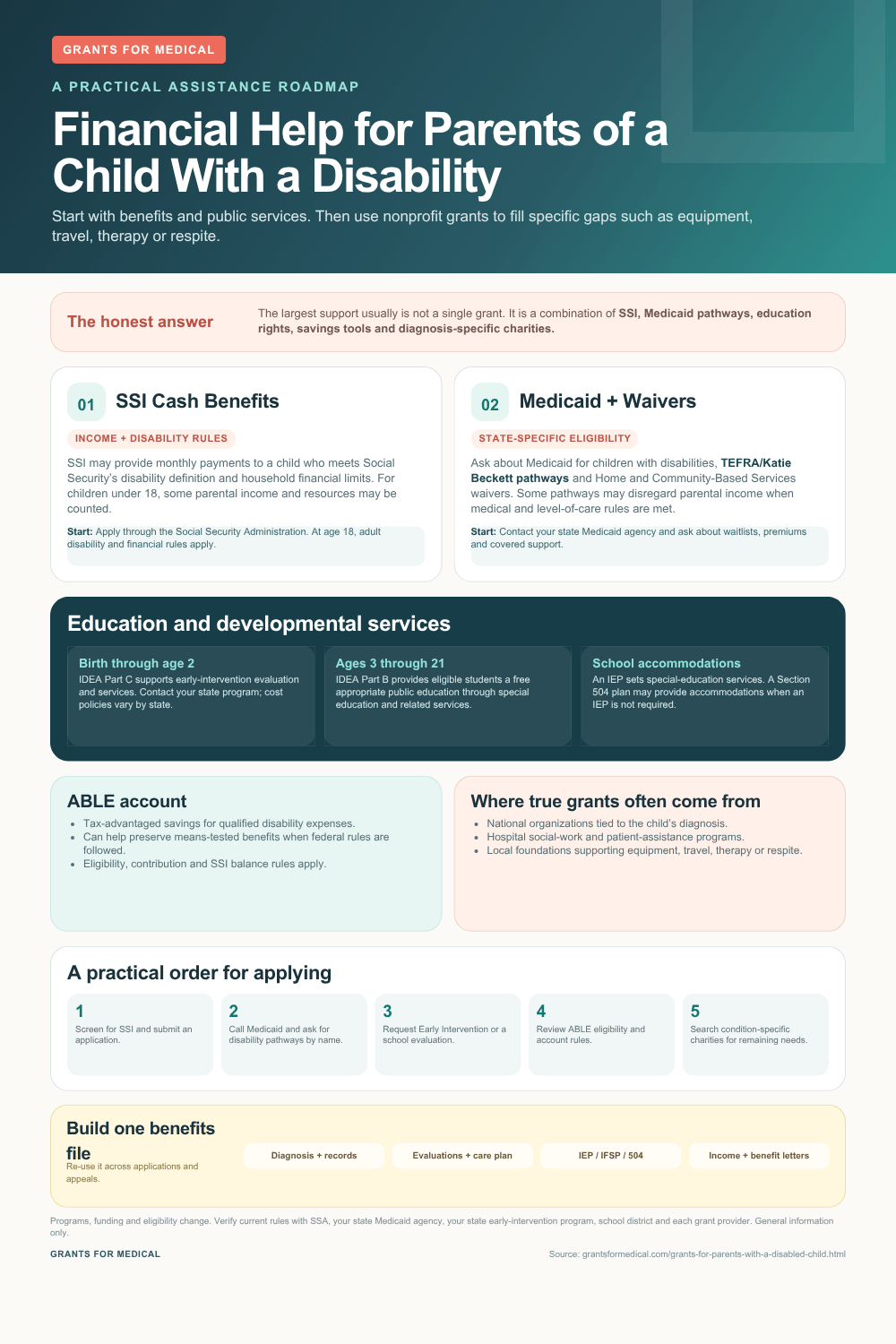
The biggest help for a disabled child rarely comes as a “grant.” It comes as monthly benefits, health coverage, and education entitlements: Supplemental Security Income, Medicaid and its waivers, early intervention, and special education. Disease-specific charities can fill gaps. Understanding this stack matters far more than chasing a grant that may not exist.
Supplemental Security Income (SSI)
SSI provides monthly cash for disabled children in low-income households, with a federal maximum that adjusts each year. For a child under 18, part of the parents’ income and resources is counted, so higher-earning families may not qualify while the child is young, but that counting stops at age 18, when many young adults with disabilities become eligible on their own. Apply through the Social Security Administration.
Medicaid and the Katie Beckett Pathway
This is the one many families miss. Beyond regular Medicaid, the Katie Beckett or TEFRA pathway lets many states cover a disabled child at home without counting the parents’ income, if the child needs an institutional level of care. That means even middle-income families may get Medicaid for their disabled child, sometimes with a modest sliding-scale premium. Home and Community-Based Services waivers can add in-home support and respite care. Contact your state Medicaid agency, since these are state-administered.
Early Intervention and Special Education
Two education entitlements provide free services. Early Intervention under IDEA Part C serves children from birth through age two with developmental delays, and parents can self-refer with no diagnosis required. Special education under IDEA Part B serves children ages three through twenty-one through an Individualized Education Program in the public schools. Both are free and are rights, not charity, so use them fully.
Savings, Auxiliary Benefits, and Charities
An ABLE account lets you save for disability expenses without jeopardizing SSI or Medicaid. If a parent receives Social Security disability, dependent children may qualify for auxiliary benefits on that record. And disease-specific charities tied to your child’s diagnosis are often the best real source of grants, equipment, and travel funds, so search for the national organization for your child’s condition.
A Practical Order
Start with SSI and Medicaid, asking specifically about the Katie Beckett or TEFRA pathway, which can cover your child regardless of your income. Enroll in Early Intervention or special education for free services. Open an ABLE account to save safely. And find the national charity for your child’s diagnosis for targeted grants. See our guide to charities that help with medical bills for related help.
Getting Organized for the Long Term
Caring for a disabled child is a marathon, so organization pays off. Keep a binder or digital folder with the diagnosis, evaluations, IEP or IFSP, and benefit letters, since you will reference them across SSI, Medicaid, and school programs. Learn the specific name your state uses for the Medicaid waiver and apply early, because waivers often have waitlists. Connect with a parent-to-parent network or Family-to-Family Health Information Center in your state, which offers free guidance from families who have navigated the same systems. And revisit eligibility at key ages, especially age 18, when SSI rules change and your child may newly qualify.
SSI for Children Explained
One of the most valuable benefits for a disabled child is SSI. It provides monthly cash.
Supplemental Security Income pays monthly benefits for disabled children in low-income households. For a child under 18, part of the parents’ income is counted, so higher-earning families may not qualify while the child is young. That counting stops at 18. Apply through the Social Security Administration, and appeal if you are denied at first.
Your Child’s Educational Rights
A child with a disability has strong educational rights, and they are free. Use them fully.
Under federal law, a child can receive Early Intervention services from birth to age two, and special education through an Individualized Education Program in the public schools. A 504 plan can provide accommodations. These are rights, not charity, so do not hesitate to request an evaluation from your school or state program.
Disabled Child Assistance FAQs
Can I get help paying for equipment or therapy?
Often yes. Medicaid and its waivers may cover medically necessary equipment and therapy, and disease-specific charities frequently help with equipment, travel, and costs insurance denies.
Are there grants for parents of a disabled child?
The biggest help is benefits, not grants: SSI, Medicaid and waivers, early intervention, and special education. Disease-specific charities offer real grants.
Can my child get Medicaid even if I earn too much?
Possibly. The Katie Beckett or TEFRA pathway lets many states cover a disabled child without counting the parents’ income.
What is SSI for children?
Monthly cash for disabled children in low-income households, applied for through the Social Security Administration.
What free services can I get for a young child?
Early Intervention (birth to age two) and special education (ages three to twenty-one), both free under federal law.
What is an ABLE account?
A tax-advantaged savings account for disability expenses that generally does not affect SSI or Medicaid eligibility.
Where do real grants come from?
Often from disease-specific charities tied to your child’s diagnosis, which may offer grants, equipment, and travel funds.
Program availability, eligibility rules, deadlines, and award amounts can change, and submitting an application does not guarantee funding.