Lap band surgery costs roughly $12,000 to $20,000 without insurance, which makes it look like the budget option among weight loss procedures. Before you pursue it on price, you should know that the adjustable gastric band has been almost entirely abandoned in the United States. Volumes fell from about 55,932 procedures in 2011 to 773 in 2023, a decline of roughly 98.6%. Most major centers no longer offer it. This page covers what it costs, why it fell out of use, and what to do if you already have a band.
What the Lap Band Costs
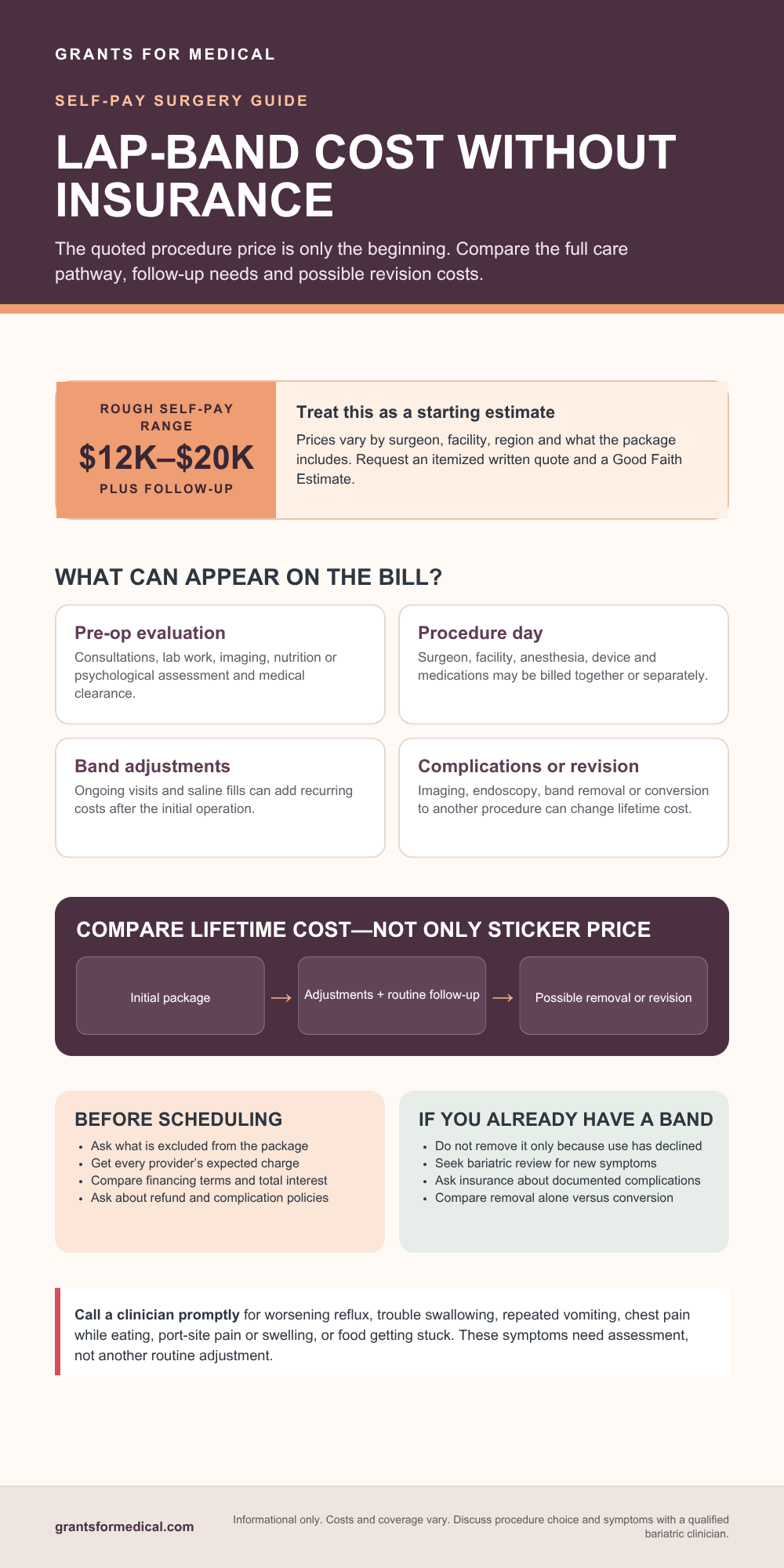
Self-pay pricing generally lands between $12,000 and $20,000, below a sleeve or bypass. Those figures come from commercial sources rather than any government dataset, so get a written quote and a Good Faith Estimate, which providers must give uninsured and self-pay patients under the No Surprises Act.
The sticker price is misleading, though, because the band is not a one-time cost. It requires ongoing clinic visits for saline adjustments, and it carries a substantially higher chance than other procedures of needing a further operation. Once you add revisions or removal, the cheaper option frequently is not.
Why the Band Collapsed
In 2011 the adjustable gastric band accounted for about 35% of all bariatric surgery in the US. By 2023 it was about 0.3%. That is not a shift in fashion, it is the profession responding to outcomes.
The recurring problems were:
Slippage, where the band moves out of position and requires correction. Erosion, where the band gradually works its way into the stomach wall. Port and tubing failures, since the access port sits under the skin and can flip, leak, or become infected. Disappointing durability, with typical excess weight loss of 40% to 50% that often did not hold. And high reoperation rates, to the point where in many national registries band removals and revisions now outnumber new placements.
A device that frequently needs removing is a poor value even at a lower price.
What Is Done Instead
The sleeve gastrectomy now accounts for roughly 58% of US bariatric procedures and gastric bypass about 23%. Both produce greater and more durable weight loss than a band, and neither requires a foreign device to remain in your body or ongoing adjustment visits.
If cost is your reason for considering a band, compare against bundled self-pay sleeve packages, which some centers advertise from around $9,500 to $12,500. That can be less than a band once band follow-up is counted, for a procedure with a far better track record. See our guide to weight loss surgery cost and insurance coverage for the full comparison.
If You Already Have a Band
Plenty of people are living with bands placed a decade or more ago, and a band that is working well does not have to be removed simply because the procedure went out of favour. What matters is whether it is causing problems.
Talk to a bariatric surgeon if you have any of the following: reflux or heartburn that is new or worsening, difficulty swallowing or food getting stuck, vomiting after meals, chest pain when eating, weight regain despite adjustments, or pain and swelling around the port site. These can indicate slippage, erosion, or obstruction, and they need assessment rather than another adjustment.
Two options exist if the band is failing. Removal alone, which usually leads to weight regain unless paired with another plan. Or conversion, most often to a sleeve or bypass, sometimes in a single operation and sometimes staged. Revisions made up about 12% of all US bariatric procedures in 2023, so this is a well-established pathway rather than an unusual request.
Insurance frequently covers band removal or revision when there is a documented complication, even where it would not cover a first bariatric surgery. Ask specifically about coverage for a complication rather than for weight loss surgery, since they are assessed differently.
Lap Band Cost and Status FAQs
How much does lap band surgery cost without insurance?
Roughly $12,000 to $20,000, plus ongoing adjustment visits. Because reoperation rates are high, the lifetime cost is often higher than the initial quote suggests.
Is lap band surgery still done?
Very rarely. US volumes fell from about 55,932 in 2011 to 773 in 2023. Most major centers no longer offer it as a first procedure.
Why did doctors stop using the lap band?
Slippage, erosion into the stomach wall, port and tubing failures, weight loss that often did not last, and high rates of reoperation. In many registries, removals and revisions now exceed new placements.
Should I have my lap band removed?
Not automatically. A band that is working without symptoms can stay. See a bariatric surgeon if you have new reflux, trouble swallowing, vomiting after meals, chest pain when eating, port site pain, or weight regain despite adjustments.
Can a lap band be converted to a sleeve or bypass?
Yes, and it is common. Revisions accounted for about 12% of US bariatric procedures in 2023. Conversion may be done in one operation or in two stages depending on your anatomy and any inflammation.
Will insurance cover band removal?
Often, when there is a documented complication such as slippage or erosion. Coverage for a complication is assessed differently from coverage for elective weight loss surgery, so frame the request that way.